Address: 5, 4th km of Chervishevsky Trakt, Tyumen, Russia
Phone: +7 (3452) 293-693
Submit a request
By clicking the button, you accept the Privacy Notice and Consent to the processing of personal data.
X
Thank you for your request!
Your request has been submitted. Our representative will contact you shortly.
Albert Akramovich Sufianov
Chief Physician and Medical Director of the Federal Center of Neurosurgery of the Ministry of Health of Russia (Tyumen); Doctor of Medical Sciences, Professor; Corresponding Member of the Russian Academy of Sciences; Honored Physician of the Russian Federation; Member of the World Academy of Neurological Surgery (WANS); Chair of the Innovation and Technology Committee of the World Federation of Neurosurgical Societies (WFNS).
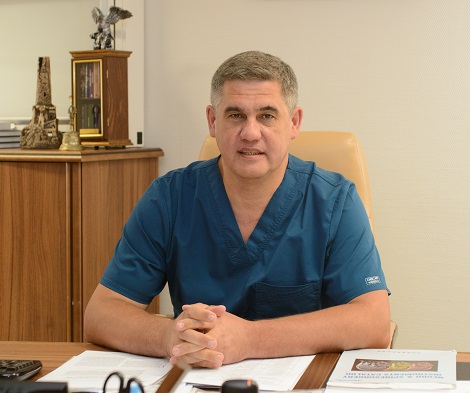
Dear friends, I am pleased to welcome you to our website.
My team and I have built a center that is unmatched in its technology and effectiveness. Over 15 years, it has become known worldwide, and most importantly, at the Federal Center of Neurosurgery in Tyumen we have helped nearly 50,000 patients regain their health!
The hallmark of our Center is minimally invasive neurosurgery focused on preserving each patient’s health and quality of life, together with comfortable conditions, an individualized approach, attentive care and kindness.
We provide treatment to patients from every region of Russia and from countries near and far abroad. We give patients a chance to recover even in cases where other medical institutions may be unable to help.
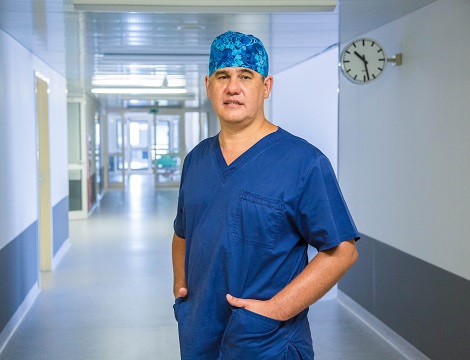
We perform complex surgeries using proprietary techniques, and many of our studies and surgical procedures become important scientific advances in medicine.
Today, the Federal Center of Neurosurgery in Tyumen comprises five specialized departments, a state-of-the-art diagnostic department and its own outpatient clinic, seven modern operating rooms including a hybrid operating room with a CT scanner, an early neurorehabilitation department, a modern laboratory and advanced diagnostic equipment that enables highly accurate assessment of our patients.
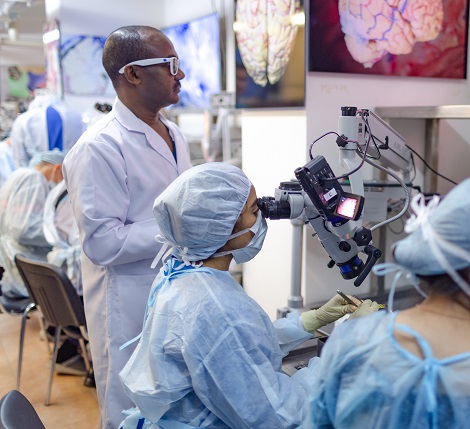
In addition to its clinical work, the Federal Center of Neurosurgery in Tyumen is known as a unique educational platform.
We nurture the future leaders of neurosurgery. Neurosurgeons from around the world seek training at our Center. Residents, postgraduate students, neurosurgeons and physicians in other highly specialized fields train at the clinical base of the Department of Neurosurgery of Sechenov University, which I lead.
Practical training at our Center is based in an 11-station microsurgical laboratory, with each workstation serving as a miniature counterpart of a modern microsurgical operating room.
The Center regularly hosts international conferences, forums, seminars and master classes.
Our clinic’s motto is to give people life with a clear mind!
Medical Tourism
For 15 years, we have been creating the conditions needed to restore your health. We have made every effort to ensure that your stay at the Center is comfortable and your recovery is as rapid as possible.
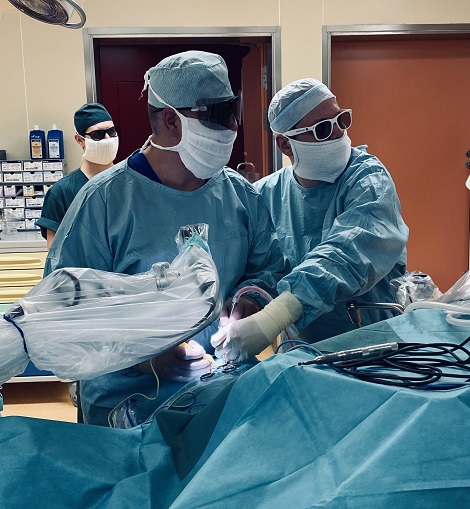
Why choose the Federal Center of Neurosurgery?
We strive to contribute to the well-being of every patient, to inspire hope and to provide support during difficult times. We deliver a high standard of medical care through the professionalism of our entire medical team, modern diagnostic and treatment methods, and trust between doctor and patient.
The strong scientific and clinical expertise of our staff, together with the Center’s modern equipment, enables us to develop new diagnostic and treatment methods and improve existing approaches for many nervous system disorders. This allows us to provide highly specialized care to patients with the most severe conditions.
During its 15 years of operation, our clinic has made rapid progress in high-technology neurosurgical care. Today, by many measures, it ranks alongside the world’s leading neurosurgical centers.
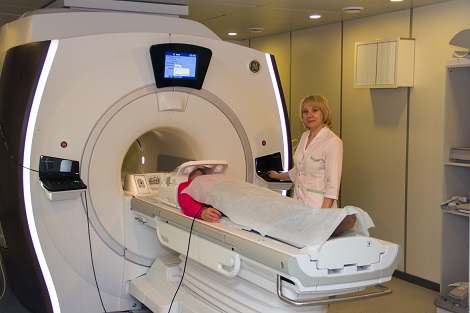
A broad range of medical services
The Federal Center of Neurosurgery in Tyumen provides a wide range of procedures in five specialized neurosurgical departments:
• Department of Pediatric Neurosurgery
• Department of Vascular Neurosurgery
• Department of Spinal Neurosurgery
• Department of Neuro-Oncology
• Department of Functional Neurosurgery
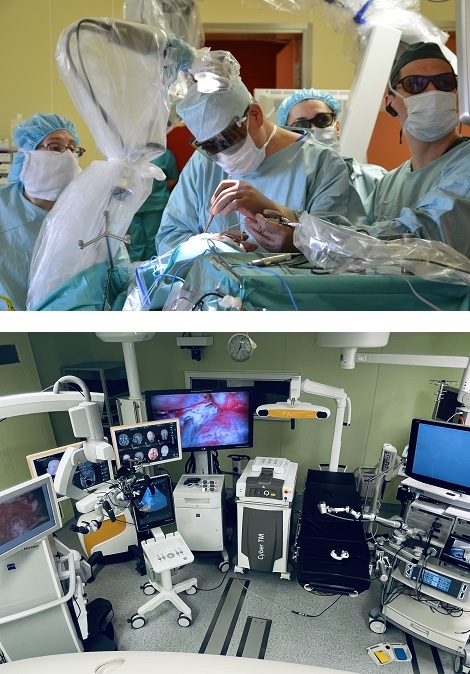
State-of-the-art operating room equipment
At the Federal Center of Neurosurgery in Tyumen, we perform unique procedures using proprietary techniques unavailable elsewhere in the world. The Center has seven operating rooms equipped with modern technology and instruments.
Intraoperative diagnostic imaging is provided by an Aquilion LB multislice spiral CT scanner, a CereTom mobile CT scanner and an O-arm intraoperative mobile imaging system, with 3D reconstruction and integration with surgical navigation systems.
Every operating room is equipped with expert-class surgical microscopes.
The Center uses the VITOM 3D exoscope to improve visualization and provide direct control of the surgeon’s microsurgical movements.
The clinic also uses laser surgery with the Cyber TM system. The thulium laser provides high procedural efficiency and excellent hemostasis.
The Center uses endovascular techniques, minimally invasive surgical approaches, endoscopic procedures, neurostimulator implantation, reconstructive techniques and many other advanced methods.
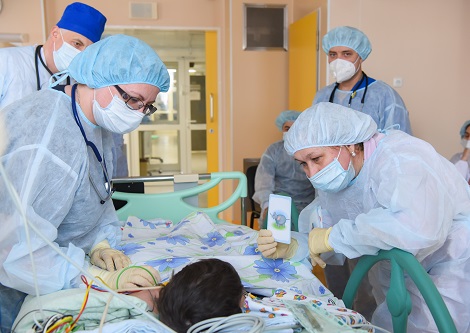
A comfortable hospital stay
For your comfort, every department offers only single and double rooms that meet modern standards. The rooms are fitted with German-made adjustable hospital beds. Each room has a private bathroom, refrigerator, safe and a nurse-call button that sends an audible and visual signal to the nursing station. Bedhead units provide connections for medical equipment and oxygen supply. All necessary accessibility arrangements are available for people with disabilities. Five meals a day are provided, with medical diets taken into account.
Video
Learn more about the Federal Center of Neurosurgery and its approach to advanced patient care.
Price List
Estimated inpatient treatment costs and average length of stay.
| No. | Condition | Treatment method | Cost with minimum number of bed-days (RUB) | Cost with maximum number of bed-days (RUB) | Average hospital stay (bed-days) |
|---|---|---|---|---|---|
| 1 | Hydrocephalus | Endoscopic third ventriculostomy, endoscopic aqueductoplasty, endoscopic cyst fenestration | 760,600.00 | 835,600.00 | 5–10 |
| 2 | Craniosynostosis | Endoscopic cranioplasty for craniosynostosis | 728,900.00 | 1,228,900.00 | 7–12 |
| 3 | Congenital malformations of the spinal cord and spine (lipomas, diastematomyelia, myelomeningocele, dermal sinus, dermoid cyst) | Microsurgical reconstruction of a congenital malformation of the spinal cord and spine | 981,200.00 | 1,026,200.00 | 7–10 |
| 4 | Arterial aneurysms | Microsurgical clipping of the aneurysm neck | 1,875,800.00 | 2,477,400.00 | 7–10 |
| Arterial aneurysms | Endovascular embolization of aneurysms | 2,449,600.00 | 2,798,600.00 | 6–8 | |
| 5 | Arteriovenous malformations | Microsurgical resection of an arteriovenous malformation | 1,982,400.00 | 2,152,400.00 | 14–21 |
| Arteriovenous malformations | Endovascular embolization of an arteriovenous malformation | 2,102,400.00 | 2,257,400.00 | 14–21 | |
| 6 | Carotid-cavernous fistula | Endovascular embolization of a carotid-cavernous fistula | 3,317,400.00 | 3,522,400.00 | 14–21 |
| 7 | Brachiocephalic artery disease | Carotid endarterectomy | 508,700.00 | 583,700.00 | 5–10 |
| Brachiocephalic artery disease | Carotid stenting | 683,700.00 | 808,700.00 | 5–10 | |
| 8 | Degenerative spinal disorders | Lumbar microdiscectomy | 664,700.00 | 694,700.00 | 4–6 |
| Degenerative spinal disorders | Cervical microdiscectomy | 620,600.00 | 635,600.00 | 8–9 | |
| Degenerative spinal disorders | Endoscopic transforaminal or interlaminar removal of a herniated intervertebral disc | 840,600.00 | 870,600.00 | 8–10 | |
| Degenerative spinal disorders | Endoscopic facet nerve rhizotomy | 359,300.00 | 374,300.00 | 4–5 | |
| 9 | Hemangiomas | Percutaneous vertebroplasty | 717,400.00 | 747,400.00 | 3–5 |
| 10 | Schwannomas, meningiomas, and tumors of the spinal nerves and meninges | Microsurgical resection of spinal cord tumors | 783,400.00 | 828,400.00 | 9–12 |
| Parkinson’s disease. Dystonia. | Stereotactic lesioning of deep brain structures | 776,700.00 | 821,700.00 | 7–10 | |
| 15 | Defects, deformities, and developmental anomalies of the skull bones | Reconstructive procedures for defects and deformities of the cranial vault and skull base, orbit, and adjacent regions of the facial skeleton | 894,700.00 | 1,597,900.00 | 8–11 |
| Defects, deformities, and developmental anomalies of the skull bones | Posterior fossa decompression and duraplasty for Chiari malformation | 1,339,300.00 | 1,369,300.00 | 8–12 | |
| Drug-resistant epilepsy | Lobectomy; subtotal resection of the epileptogenic zone; amygdalohippocampectomy; microsurgical callosotomy; functional microsurgical hemispherotomy | 2,271,300.00 | 2,316,300.00 | 11–14 | |
| 17 | Trigeminal neuralgia; hemifacial spasm | Microvascular decompression of a cranial nerve | 729,700.00 | 1,014,700.00 | 10–16 |
| Trigeminal neuralgia; hemifacial spasm | Percutaneous lesioning of the trigeminal nerve root | 776,700.00 | 821,700.00 | 7–10 | |
| 18 | Peripheral nerve disorders and injuries | Neurolysis, decompression, and suturing of a peripheral nerve | 654,100.00 | 669,100.00 | 5–6 |
Prices are shown in Russian rubles (RUB). The final cost and length of stay depend on the clinical situation and treatment plan. The numbering follows the source price file.

Federal State Budgetary Institution “Federal Center of Neurosurgery” of the Ministry of Health of the Russian Federation (Tyumen), 625000, 5, 4th km of Chervishevsky Trakt, Tyumen, Russia
Privacy Policy
Privacy Policy
This website respects your rights and protects the confidentiality of the information you provide, transmit and store.
Submitting a request through this website constitutes your consent to the processing of your data and the subsequent transfer of your contact details to our organization.
Personal data means information relating to an identifiable individual, including a name, contact details such as an email address, and other information classified as personal data under Federal Law No. 152-FZ of 27 July 2006, “On Personal Data.”
Personal data is processed in order to provide information about the services offered by our organization.